N300SW
Boeing 737-300 (737-3H4) (3H4)
The Boeing Company
5 Hours
Duration of Flight
2255 NM
Range
473 MPH
Max Speed
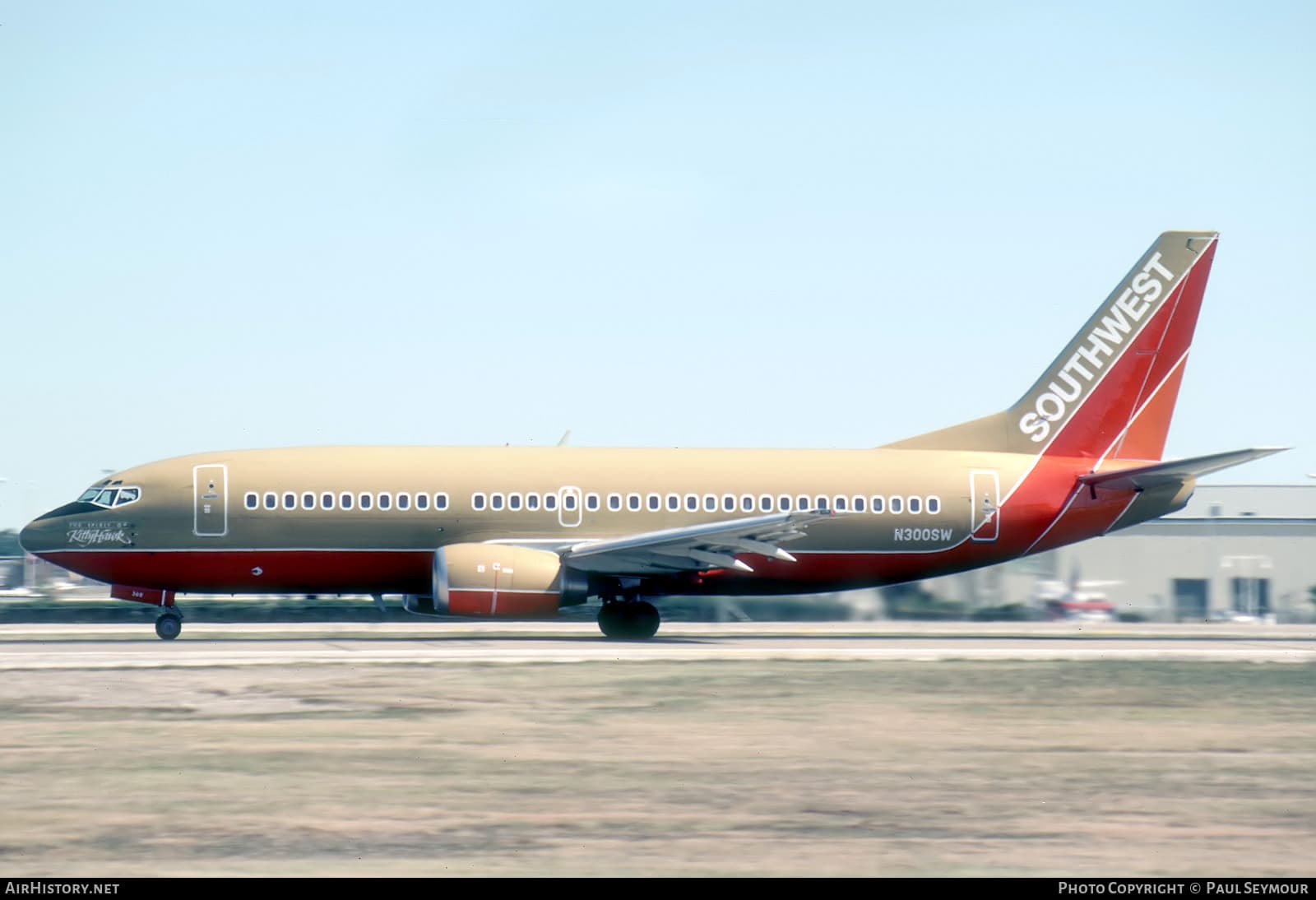
Gallery
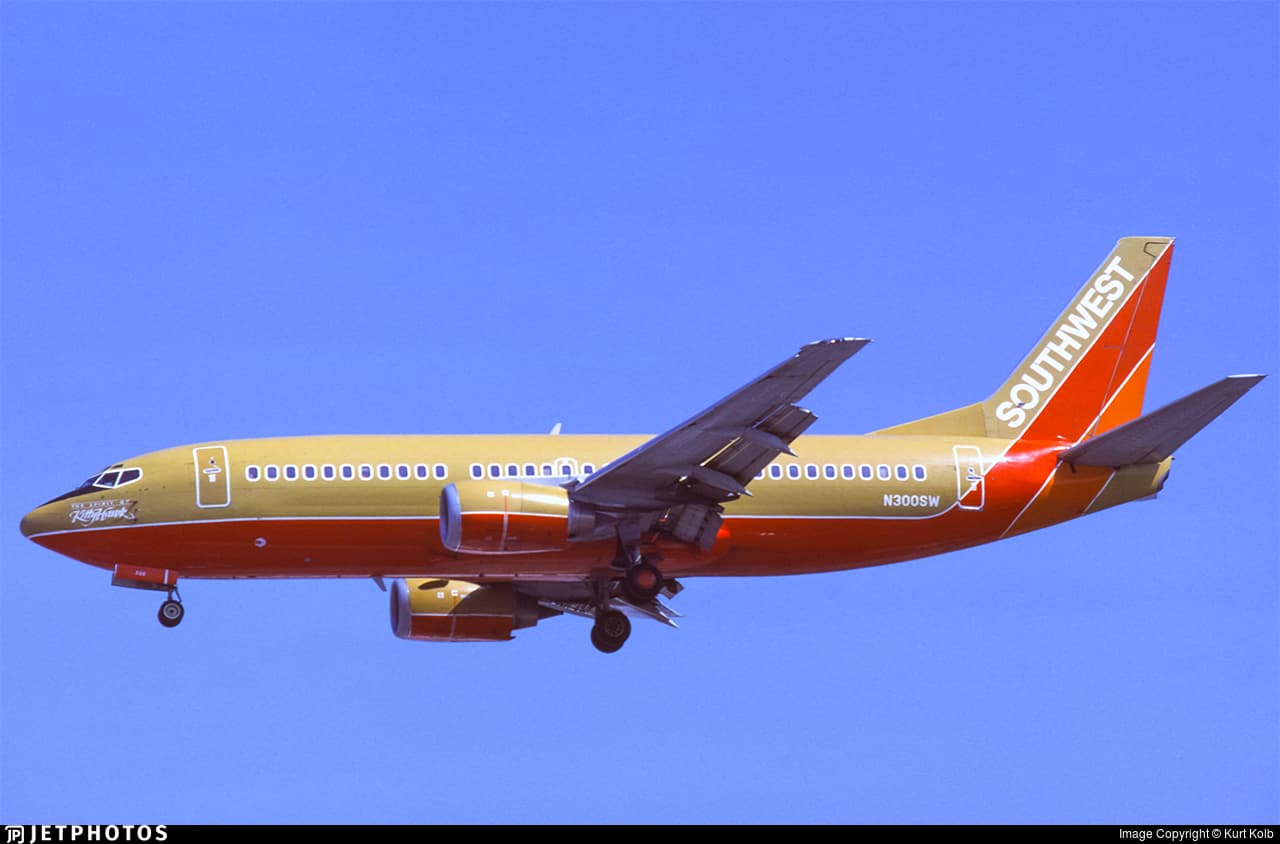



Basic Information
Airframe
Data valid as of 2023-03-04No flight history available
Flight records for this aircraft have not been tracked yet.
AI Summary
Boeing 737-300 (737-3H4) (3H4)
Overview
US registration N300SW. Delivered to Southwest in 1984 (first 737-300 in Southwest service), retired from revenue service in April 2011 and donated to Frontiers of Flight Museum; FAA certificate issued to the museum in 2011.
Specifications
- Engines: 2× CFM56-3 series (20000 lbf each)
- Range: 2255 nm
- Cruise: 430 kts
- Seats: 149
- Ceiling: 37000 ft
Operations & Cabin
149-seat single-class (Southwest high-density layout historically); currently restored as museum exhibit with visitor access. Restored interior for museum display; visitor access to cabin and (in some periods) cockpit exhibits reported.
Model & Market Context
This airframe, tail number N300SW, is a Boeing 737-300 (737-3H4) built in 1984 with manufacturer serial number 22940. It is recorded as owned by FRONTIERS OF FLIGHT MUSEUM INC, a corporation based in Dallas, TX, US, and is registered in the US. The airframe carried a 149-seat single-class, Southwest high-density layout historically, and has since been restored as a museum exhibit with visitor access at its current home. Registry records and preservation efforts emphasize its role as a representative example of early-generation CFM56-powered 737-300 service life rather than an active revenue aircraft.
This specific 737-300 was outfitted in a 149-seat single-class configuration consistent with the high-density layout historically used by Southwest; today the cabin is presented for public access as part of a museum display. Typical mission profiles for this airframe during airline service would have been short- to medium-haul domestic rotations, leveraging a cruise speed of 430 kts and a range of 2,255 nm to serve frequent-turnaround schedules. Avionics and systems on the 737-300 series are conventional for late-1970s/1980s Boeing narrowbodies, requiring maintenance regimes appropriate to older-generation avionics and airframe systems. As a museum exhibit, the aircraft’s maintenance focuses on preservation, static-system functionality and visitor safety rather than line service airworthiness.
The Boeing 737-300 occupies the early Classic-series niche between older 737 variants and later Next Generation models, offering modest range and capacity for short- to medium-haul markets. With CFM56-3 series engines providing 20,000 lbf thrust apiece, the type competed historically with similarly sized turbofan narrowbodies for high-frequency domestic routes and charter work. By virtue of its 1984 build year and 149-seat high-density fit, resale and operator demand have declined relative to newer 737-700/800 series models, and maintenance and parts considerations reflect legacy-system support and airframe fatigue monitoring common to aircraft of this vintage.
Aircraft Comparison
| Parameter | N300SW | N111AS | N1181A |
|---|---|---|---|
| Serial Number (MSN) | 22940 | 29488 | 26206 |
| Year Manufactured | 1984 | 1998 | 1993 |
| Duration of Flight | 5 Hours | 9 Hours | 13 Hours |
| Range | 2255 NM | 4100 NM | 5990 NM |
| Max Speed | 473 MPH | 458 MPH | 493 MPH |
| Aircraft Class | Over 20,000lbs | Over 20,000lbs | Over 20,000lbs |
| Service Ceiling | 37000 ft | 42000 ft | 41100 ft |
| Max Passengers | 149 | 239 | 0 |
| Cabin Comfort | No items found. | No items found. | No items found. |