Ownership Cost
Cessna Citation I Ownership & Operating Costs
Everything you need to know about the costs to own and operate the Cessna Citation I. Fixed and variable cost detailed breakdown.
 BenedictPrivate Aviation ConsultantUpdated December 12, 2024 · Published May 26, 2021 · 9 min read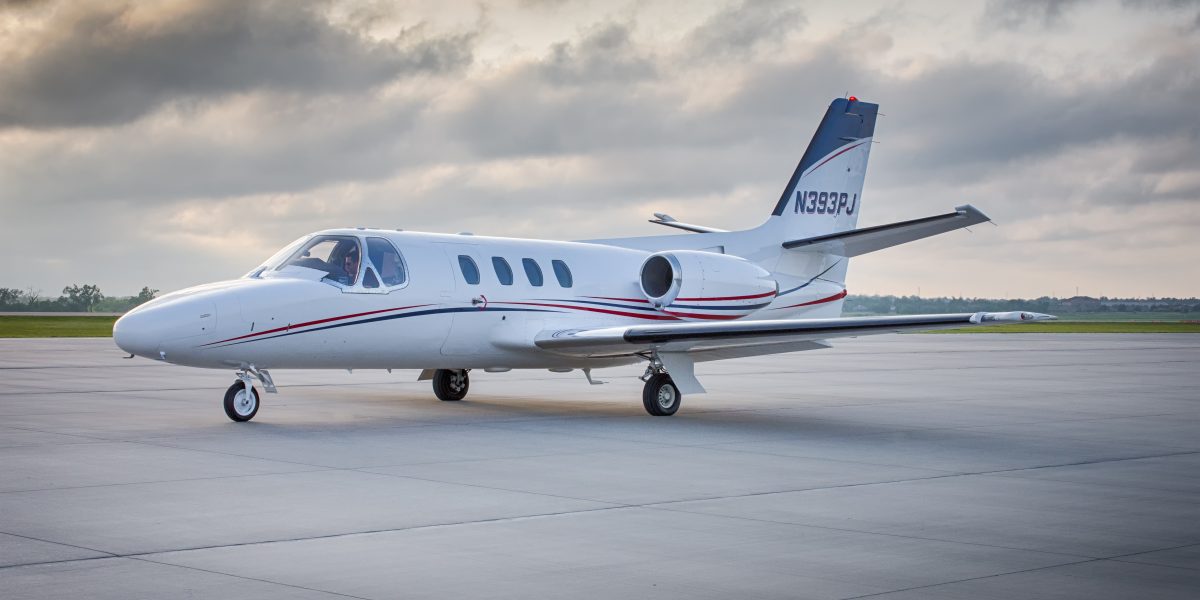
At a glance
- Fixed costs / year
- $482,424
- Variable / flight hour
- $3,139
- Total / hour at 200 hrs a year
- $5,551
- class rate, published rates
- Charter, light jet
- $7,500–$9,500/hr
- Passengers
- Up to 6
- Range
- 1,328 nm
- $1,267/hr in fuel today, est.
- Fuel burn
- 160 gal/hr
- Cruise speed
- 357 kts
CRAFT estimates in USD (how we estimate them is below). Operating costs vary with fuel price, region and mission. Fuel today at $7.92 a gallon, our estimate of the U.S. average FBO price for Jet A: jet fuel price today. Fuel burn: Conklin & de Decker average hourly fuel burn, via Private Jet Card Comparisons (June 2025).
Cessna Citation I price, value, specs and every tailFAA airworthiness directives for the Citation I
Deliveries of the Cessna Citation I began in 1971, with deliveries ending in 1985. 260 Citation I aircraft are currently in active service.
The Citation I can accommodate up to 6 passengers, with a maximum baggage capacity of 40 cubic feet.
When in its optimum configuration, the Cessna Citation I can cruise non-stop for up to 1,328 nautical miles (1,528 miles / 2,459 km). However, when configured for the fastest cruise speed, the Citation I can maintain a cruise speed of 357 knots.
The Cessna Citation I can cruise at up to 41,000 feet. Additionally, the Citation I has an average hourly fuel burn of 160 Gallons per Hour (GPH).
Thanks to its Pratt & Whitney Canada JT15D-1B engines, the Citation I has a total thrust output of 4,400 lbs.
In terms of cost, chartering a light jet like the Cessna Citation I costs about $7,500 to $9,500 a flight hour on published hourly rates for the class. Back when deliveries of the Cessna Citation I began, the list price for a new example was $0.9 million.
Jump straight to the total cost table of the Cessna Citation I.
Cessna Citation I
Cessna Citation I Cost Overview
When it comes to operating the Cessna Citation I, there are two expense categories to consider – fixed costs and variable costs.
Fixed costs are those that you pay no matter what. Whether the aircraft flies or not has no effect on fixed costs. These costs do not change in relation to the number of hours the aircraft flies.
So, therefore, whether you fly the aircraft 50 hours per year or 500 hours, the fixed costs will remain the same.
The estimated annual fixed cost for operating the Citation I is $482,424.
Variable costs, on the other hand, are directly proportional to the number of hours the aircraft flies per year.
The best example of a variable cost in this case is fuel use. One of the biggest costs when flying by private jet is fuel. See this to learn about private jet fuel costs.
Clearly, the more you fly the aircraft, the more fuel it will use. Therefore, flying 500 hours per year will result in variable costs 10 times greater than if you were to fly 50 hours per year.
Therefore, the estimated variable cost for private jets is presented as an hourly figure. This is how much extra the aircraft will cost you per flight hour.
Therefore, the estimated hourly variable rate for operating the Cessna Citation I is $3,139.
Of course, this hourly variable cost is different to that of the estimated hourly charter price. This is because, per hour, charter flights cost more. There are further parties involved. The hourly charter price is the aircraft’s hourly variable cost, along with factoring in fixed costs and broker fees.
Citation I Fixed Cost Breakdown
When it comes to fixed costs, there are six criteria that have been identified as the biggest contributors to the annual cost of operation.
These costs are crew salary, crew training, hangar, insurance, management and then the additional, miscellaneous fixed costs.
These costs are explained in further detail below the table.
The table below details the estimated cost of each fixed cost for the Cessna Citation I.
| Fixed cost | Per year |
|---|---|
| Crew Salary | $311,079 |
| Crew Training | $38,000 |
| Hangar | $39,270 |
| Insurance | $9,075 |
| Management | $45,000 |
| Miscellaneous Fixed | $40,000 |
| Total | $482,424 |
Crew Salary
The salary of crew members is one of the most significant costs of operating an aircraft.
Naturally, the crew are an essential part to the operation of the aircraft. Without pilots your aircraft will not be going anywhere.
Moreover, crew are essential to the safe operation of your aircraft. Therefore, ensuring that your crew members are appropriately certified and skilled is of paramount important. However, the higher the skill level of the crew, the higher salary they demand.
Crew Training
Having well trained crew members is important. Again, they are integral to the safe and efficient operation of your aircraft.
Keeping aircraft type ratings valid and ensuring that crew members maintain their high standards is key.
This is a cost that will keep on occurring every year, whether your aircraft flies or not.
Hangar Costs
The storage of a private jet when not in use is important to consider.
Where are you going to leave your multi-million dollar aircraft when it isn’t in the sky?
Of course, you want it to be somewhere safe, secure and convenient. Therefore, for most private jet owners a hangar is a preferable option over leaving it outside.
Naturally, there are many factors that will influence the annual cost of hangarage. Factors such as aircraft size, airport location and service amenities will all impact the cost.
As a result, the hangar cost stated is a general average for the aircraft type. However, this fee can fluctuate significantly.
Insurance Costs
In simple terms, there are two types of insurance that private jets must have.
The first is liability insurance. This provides cover against loss, damage or injury to third parties. Third parties in this case include passengers, cargo and baggage. While exact details will vary from policy to policy, cover is generally not provided for the pilot in command or the actual aircraft.
This then leads to the second part of private jet insurance – hull insurance. Hull insurance policies are agreed on a value basis. That is, the value of the aircraft. Therefore, in the event of a total loss, insurers will pay the agreed value as opposed to the current market value.
This are two essential pieces of insurance for private jets. However, owners may also wish to consider aviation hull war insurance and crew insurance.
Aviation hull war insurance provides cover for loss of the aircraft due to war, hijack, confiscation, malicious damage and other similar risks. This is typically chosen by owners who will be flying private jets into hazardous destinations.
Crew insurance allows pilots and crew members to be provided with an enhanced employee benefit package. Such as including loss of licence cover, personal accident cover and travel insurance.
Management Costs
Aircraft management is an essential component when owning and operating a private jet.
An aircraft management team provide all the necessary services required to fly the aircraft. For example, sourcing and managing pilots to making sure the aircraft is airworthy, are all tasks provided by your aircraft management company.
Of course, there is the option of so called self-management. This is where the management tasks are left with your pilot in command. However, this option is rarely selected. Therefore, in the ownership cost example we assume an aircraft management company is involved.
Your aircraft management team will typically perform the following tasks:
- Flight bookings
- Flight planning
- Charter marketing / sales
- Crew scheduling
- Aircraft airworthiness reviews and tasks
- Maintenance scheduling
- Invoice management
- Crew management
Additionally, your aircraft management team will likely provide many more small activities in order to ensure a smooth operation of the aircraft.
Of course, there are many factors that will affect the total price of your aircraft management fee. Primarily the difference in cost will depend on the aircraft type, use and region of operation.
Miscellaneous Fixed Costs
The miscellaneous fixed costs are made up of everything that doesn’t fit into the above categories.
Things such as the fees for charts, software and computers to manage your aircraft will be in this category.
When owning a private jet there will likely be surprise costs and upgrades that occur throughout your ownership experience.
Therefore, it is good practice to factor in additional, unexpected costs per year.
Citation I Variable Cost Breakdown
Variable costs are those that change depending on the usage of the aircraft. Variable costs can be broken down into hourly chunks.
This, therefore, results in an hourly variable cost figure. This figure is the cost per hour that the aircraft is flown.
There are five factors that we have built into the hourly variable cost figure. These values are the cost of fuel, maintenance, engine overhaul, crew, landing & handling fees, along with other various costs.
All these variables are proportional to the number of hours flown. For example, the more you fly the aircraft, the more fuel it will use.
See below for a table of the estimated hourly variable costs when operating the Cessna Citation I.
Below the table you will find an explanation of each variable.
| Variable cost | Per flight hour |
|---|---|
| Fuel Cost | $1,226 |
| Maintenance | $800 |
| Engine Overhaul | $600 |
| Crew/Landing/Handling Fees | $400 |
| Miscellaneous Variable | $113 |
| Total | $3,139 |
Fuel: the Cessna Citation I burns about 160 gallons an hour (Conklin & de Decker average hourly fuel burn, Citation I/ISP), so at $7.66 a gallon (Oct 4, 2026) fuel is $1,226 an hour. At today's estimate, $7.92 a gallon (Oct 14, 2026), it is about $1,267. Contract fuel often costs less than the posted price. Jet fuel price today
Fuel Costs
Fuel costs are a significant hourly expense when operating a private jet. The more hours you fly, the more fuel the aircraft burns.
Of course, the amount of fuel that the aircraft burns per hour will vary greatly depending on its average hourly consumption, measure in Gallons per Hour (GPH).
Read this article to learn more about how much private jet fuel costs.
Or read this article to see the different fuel burn figures for all private jets.
Different aircraft burn different volumes of fuel per hour. However, a general rule of thumb is that the larger the aircraft, the greater the hourly fuel consumption.
Of course, depending on location, fuel prices vary dramatically. Therefore, this cost will be slightly adjusted depending on the fuel cost at the FBO.
Maintenance Costs
In order to ensure that aircraft are safe to fly they require maintenance at regular intervals.
These intervals are scheduled and depend on the manufacturer’s guidelines. Moreover, maintenance is scheduled based on number of hours flown.
For example, a certain aircraft may need an inspection every 100 hours. Therefore, you can plan around when the aircraft requires maintenance.
Additionally, these maintenance events are in direct relation to the number of hours that the aircraft is flown.
Therefore, the more the aircraft flies, the more maintenance it will require.
However, this cost also takes into account any unexpected maintenance events. For example, a bird strike or blown tire will introduce an unexpected maintenance check.
Engine Overhaul Costs
An engine overhaul is a scheduled event that is essentially the maintenance and inspection of the engine.
Given the term ‘overhaul’, the event is more serious than a quick visual inspection. And, in a major engine overhaul, a complete disassembly and inspection of the engine.
Again, much like maintenance of the airframe, the more an engine is used, the more wear and tear the engine will experience. Therefore, the more hours flown, the quicker an engine overhaul will be required. Additionally, the more hours flown the more often an engine overhaul will need to be performed.
If you are interested in learning more about engine overhauls, then read this article.
Crew/Landing/Handling Costs
Crew fees, landing fees, and handling fees are highly dependant on the route taken. Therefore, it is hard to give an accurate figure.
Crew fees are those that you need to pay the crew during an extended stay. Additionally, crew fees are highly dependant on the length of stay and the location. For example, crew overnight expenses, such as hotels and food, will cost far more in New York City than Wichita, Kansas.
Secondly, when landing at an airport, aircraft are charged a landing fee. This fee is usually based on the weight of the aircraft. Therefore, larger aircraft have greater landing fees than smaller aircraft.
Landing fees will vary from airport to airport. For example, if you were to regularly fly out of La Guardia airport, New York, the cost of landing fees would be greater than if you regularly flew from Wichita National Airport.
And finally, handling fees go hand in hand with landing fees. When on the ground you will need the aircraft to be parked securely, bags unloaded and various ground services. They are typically provided by the FBO (fixed-base operator). Of course, all these services will come at a price.
Again, the price of handling fees will vary depending on airport and aircraft size.
Miscellaneous Costs
Miscellaneous variable costs are very similar to the miscellaneous fixed costs. No matter how well you plan and budget, there will always be some unexpected costs involved.
Therefore, this budget accounts for the unexpected.
Cessna Citation I Total Costs
| Annual cost | 100 hours / year | 200 hours / year | 400 hours / year |
|---|---|---|---|
| Total fixed costs | $482,424 | $482,424 | $482,424 |
| Total variable costs | $313,900 | $627,800 | $1,255,600 |
| Total annual operating cost | $796,324 | $1,110,224 | $1,738,024 |
| Total per flight hour | $7,963 | $5,551 | $4,345 |
Cessna Citation I annual budget calculator
Set the hours you expect to fly each year to estimate the annual budget to own and operate the Cessna Citation I. The total adds the annual fixed costs to the variable cost per flight hour multiplied by your hours. All figures are estimates in USD.
Annual budget calculator
$1,110,224 per year
$482,424 fixed + $3,139/hr × 200 hrs · about $5,551 per flight hour with the fixed costs spread over the hours. Cessna Citation I, CRAFT estimate.
Flying 200 hours a year without the fixed costs? Compare the Fleet Jet Card rate
How we estimate these costs
These are CRAFT's own estimates, built the same way for every aircraft we cover. The Cessna Citation I is costed as a light jet with 2 engines, flown by 2 pilots, based in the U.S. and professionally managed. Lines marked “estimate” are the midpoint of a stated range for the size class, not a quote; the others are worked out from published figures. Nothing here comes from another charter operator's or broker's budgets.
| Fixed costs | Per year | How it is worked out |
|---|---|---|
| Crew Salary | $311,079 | 1 captain at $133,150 (BLS median, commercial pilots in nonscheduled air transportation), 1 first officer at $84,540 (BLS 25th percentile, commercial pilots), plus 43% for benefits and payroll costs (BLS Employer Costs for Employee Compensation, private industry, June 2026). Source: BLS Occupational Employment and Wage Statistics, May 2025 (released May 15, 2026); BLS Employer Costs for Employee Compensation, June 2026 (released September 9, 2026) |
| Crew TrainingEstimate | $38,000 | One simulator-based recurrent course a year for each of 2 pilots, at $15,000 to $23,000 per pilot for a light jet. CRAFT estimate. Source: FAA task orders for recurrent pilot training with FlightSafety International (USAspending.gov) (orders 2024 to 2026) |
| HangarEstimate | $39,270 | A heated home-base hangar at $1,595 to $4,950 a month for a light jet, from published airport hangar rates; big-city airports cost more. Source: Published airport hangar rates (Concord-Padgett Regional, City of Concord NC; Naples Airport Authority FY2026; Pierce County WA; Smith Reynolds, Forsyth County NC) (read October 5, 2026) |
| InsuranceEstimate | $9,075 | Liability of $5,000 to $10,000 a year for a light jet, plus hull cover at 0.15% to 0.3% of a hull value of $700,000, the median of UseRadar's value data for this model (our aircraft data site). Midpoints used; pilot experience and claims history move it a lot. Source: BWI Aviation Insurance, "How much is aircraft insurance? A complete 2026 cost breakdown" (January 4, 2026); UseRadar aircraft value data |
| ManagementEstimate | $45,000 | A management company's fee of $2,500 to $5,000 a month for a light jet (crew, maintenance tracking, compliance and billing). CRAFT estimate. Source: Business Jet Traveler, "Is a management company right for you?" |
| Miscellaneous FixedEstimate | $40,000 | Navigation databases and charts, weather and flight planning, maintenance tracking, connectivity and office costs: $30,000 to $50,000 a year for a light jet. CRAFT estimate. Source: CRAFT estimate |
| Total | $482,424 |
| Variable costs | Per flight hour | How it is worked out |
|---|---|---|
| Fuel Cost | $1,226 | 160 gallons an hour (Conklin & de Decker average hourly fuel burn, Citation I/ISP) at $7.66 a gallon, our estimated U.S. average FBO price for Jet A on 2026-10-04. Contract fuel usually costs less than the posted price. Source: Fuel burn: the manufacturer's published average, else Conklin & de Decker's average hourly fuel burn; CRAFT jet fuel price data |
| MaintenanceEstimate | $800 | Scheduled inspections, parts, labor and unscheduled repairs for the airframe and avionics: $600 to $1,000 a flight hour for a light jet. Older aircraft sit at the top of the range. CRAFT estimate. Source: CRAFT estimate, checked against Pilatus CrystalCare's published program rates |
| Engine OverhaulEstimate | $600 | An hourly engine reserve or engine program for 2 engines at $225 to $375 per engine per hour for a light jet. Engine makers do not publish program rates. CRAFT estimate. Source: CRAFT estimate (engine program rates are not published) |
| Crew/Landing/Handling FeesEstimate | $400 | Landing, ramp and handling fees and crew hotels, meals and transport on trips: $300 to $500 a flight hour for a light jet. CRAFT estimate. Source: CRAFT estimate |
| Miscellaneous VariableEstimate | $113 | Catering, cabin supplies, cleaning and de-icing: $75 to $150 a flight hour. CRAFT estimate. Source: CRAFT estimate |
| Total | $3,139 |
- Annual cost = fixed costs + variable cost per hour × hours flown. At 100, 200 or 400 hours a year that is $796,324 ($7,963 an hour), $1,110,224 ($5,551 an hour), $1,738,024 ($4,345 an hour).
- Fuel price: one price for every aircraft, $7.66 a gallon on 2026-10-04, from our jet fuel price data. Every dollar a gallon moves the hourly cost by about $160.
- Not included: the purchase price, financing, depreciation, sales and use tax, major one-off events beyond the reserves (paint, interior, avionics upgrades) and any charter revenue.
Crew pay: U.S. Bureau of Labor Statistics wage percentiles (May 2025), bls employer costs for employee compensation, private industry, june 2026. Class ranges and every source are on what it costs to own a private jet; all models side by side in the operating cost league table. Spot something wrong? Tell us.
Financing · illustration
Financing a Cessna Citation I
Estimated loan payment
$5,033
a month
Operating at 200 hours
$92,519
a month, from the tables above
Monthly cost of ownership
$97,552
before depreciation and taxes
Assumptions, all examples: a price of $700,000 (the median of UseRadar's value data for this model), 20% down ($140,000), $560,000 financed over 15 years at an example rate of the U.S. bank prime rate, 7.00% on October 2, 2026 (Federal Reserve H.15): a public benchmark, not an aircraft loan rate or an offer. CRAFT is not a lender. Your rate, term and payment come from a lender's approval.
Read next
Cessna Citation X Ownership & Operating Costs
Everything you need to know about the costs to own and operate the Cessna Citation X. Fixed and variable cost detailed breakdown.
December 12, 2024 · 9 min read
Cessna Citation M2 Ownership & Operating Costs
Everything you need to know about the costs to own and operate the Cessna Citation M2. Fixed and variable cost detailed breakdown.
December 12, 2024 · 9 min read
Cessna Citation Longitude Ownership & Operating Costs
Everything you need to know about the costs to own and operate the Cessna Citation Longitude. Fixed and variable cost detailed breakdown.
December 12, 2024 · 2 min read


Charter Sales
Tell us the trip. We'll tell you the number.
Route, dates, rough timing, how many people. That is enough to start, and you get a firm price for that specific trip rather than a range.
Text us and you'll get a reply within 60 seconds, any hour.