N747NA
Boeing 747SP-21 (SOFIA) (SP-21)
Boeing
13 Hours
Duration of Flight
6650 NM
Range
526 MPH
Max Speed
Gallery




Basic Information
Airframe
Data valid as of 2024-07-18| Date | From | To | Flight Time | Status |
|---|---|---|---|---|
| 2022-12-13 | N/A | N/A | N/A | ✓ Landed |
| 2022-09-29 | N/A | N/A | N/A | ✓ Landed |
| 2022-07-13 | N/A | N/A | N/A | ✓ Landed |
| 2016-06-06 | N/A | N/A | N/A | ✓ Landed |
AI Summary
Boeing 747SP-21 (SOFIA) (SP-21)
Overview
US-registered N747NA, MSN 21441; acquired and modified for the SOFIA airborne observatory program and later placed in museum preservation. Airworthiness/certificate issue in 1997 for the NASA program; registration history includes Pan Am and United prior to NASA acquisition.
Specifications
- Engines: 4× Pratt & Whitney JT9D (JT9D-7 series) (43500 lbf each)
- Range: 6650 nm
- Cruise: 505 kts
- Seats: 360
- Ceiling: 45100 ft
Operations & Cabin
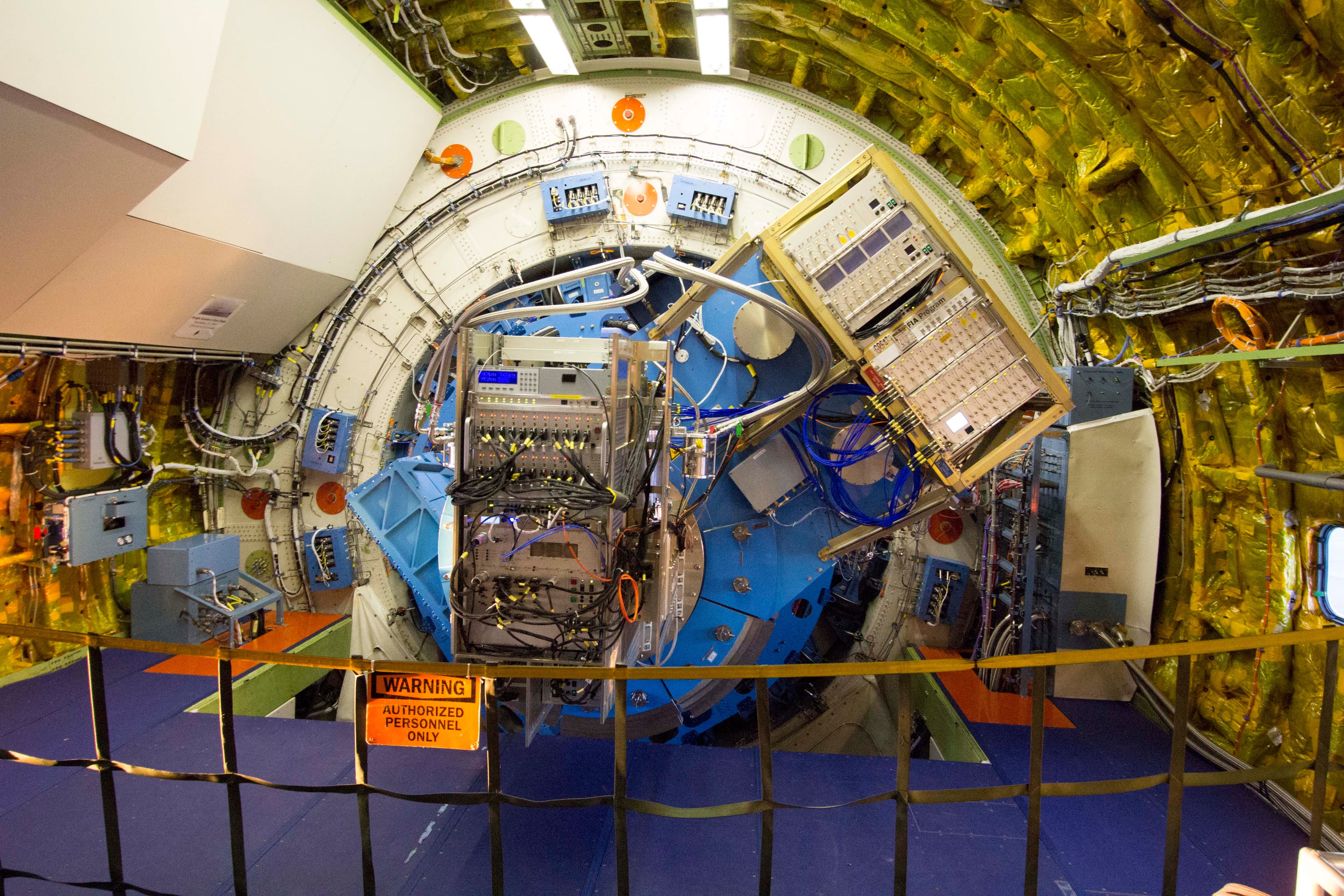
Mission-modified: aft telescope cavity (unpressurized cavity and large deployable door), mission control/workstations and instrument racks in place of a standard passenger cabin; configured to carry flight crew + mission and science personnel rather than typical airline seating. Extensively reworked: telescope cavity in rear fuselage, instrument racks, mission consoles, cabling and data systems. No standard passenger cabin layout — internal arrangement supports sensor payloads and science operations.
Model & Market Context
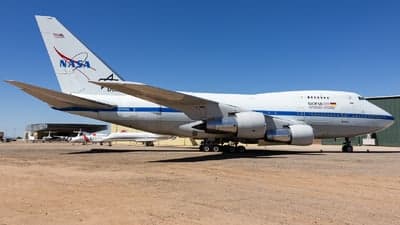
N747NA is the specially modified Boeing 747SP-21 airframe (MSN 21441) that served as NASA's Stratospheric Observatory for Infrared Astronomy (SOFIA). Delivered in 1977 and originally operated by Pan American as Clipper Lindbergh, the airframe later flew with United before being acquired and converted for the SOFIA program in the late 1990s. The modification installed a large, 2.5–2.7 meter infrared telescope in a rear fuselage cavity and substantial internal rework to support science operations and mission crew accommodations. The aircraft's powerplant family is Pratt & Whitney JT9D (JT9D-7 series), four engines, with per-engine thrust listed in public registries around 43,500 lbf. As a flying observatory its mission profile emphasized long-duration, high-altitude flights (cruising in the high 30s to low 40s thousands of feet) to put the telescope above most atmospheric water vapor for infrared observations. The airframe is no longer used for flight science missions and was ferried to a museum display location in December 2022; its FAA registration history and museum disposition are reflected in the registration record.
This airframe is mission‑configured rather than outfitted as a passenger transport: the aft fuselage contains the unpressurized telescope cavity and a large deployable door; forward and mid-cabin areas were reworked to provide mission-control consoles, instrument racks, science benches and seating for mission crew and researchers rather than a standard passenger cabin. The modification work was heavy structural and systems integration (multiple secondary systems moved or reworked to accommodate the telescope). Avionics and cockpit interfaces retain 747‑series flight systems with mission‑specific annunciation and displays added for safe telescope operations and flight‑profile limits; standard passenger amenities are not relevant to this configuration. Typical operational missions were overnight, long‑endurance flights at 38,000–45,000 ft, carrying a flight crew, mission crew and science personnel with on-board instrumentation and data systems.
The 747SP ("Special Performance") was a shortened, long‑range derivative of the early 747 family developed to give airlines extended range with reduced capacity; only 45 SPs were built, and the type is notable today for special uses and VIP conversions. As a platform the SP trades seat capacity for range and higher cruise altitude and was a logical choice for the airborne telescope program because of its structural margin, long endurance and ability to sustain high‑altitude cruise. Performance metrics for the 747SP family include cruise around Mach 0.84–0.88 (typical cruise speeds ~450–505 kt depending on config), service ceiling near FL450 (≈45,100 ft) and ferry/range capability in the ~6,600 nm class with reduced payload. For prospective operators or museums, the 747SP is now an archival type: maintenance and parts sourcing are nontrivial, and operational economics are poor compared with modern long‑range twinjets. For buyers, the key considerations are structural hours and landing cycle history, completeness of modification/maintenance records for mission‑specific conversions, and the logistics of transporting and restoring a very large airframe for static display or specialist use.
Aircraft Comparison
| Parameter | N747NA | N1013A | N101TD |
|---|---|---|---|
| Serial Number (MSN) | 21441 | 30110 | 29273 |
| Year Manufactured | 1977 | 1999 | 1999 |
| Duration of Flight | 13 Hours | 13 Hours | 13 Hours |
| Range | 6650 NM | 5980 NM | 6085 NM |
| Max Speed | 526 MPH | 493 MPH | 473 MPH |
| Aircraft Class | Over 20,000lbs | Over 20,000lbs | Over 20,000lbs |
| Service Ceiling | 45100 ft | 43100 ft | 41000 ft |
| Max Passengers | 360 | 290 | 149 |
| Cabin Comfort | No items found. | No items found. | No items found. |