N625SW
Boeing 737-300 (737-3H4) (3H4)
Boeing Commercial Airplanes
5 Hours
Duration of Flight
2255 NM
Range
491 MPH
Max Speed

Gallery

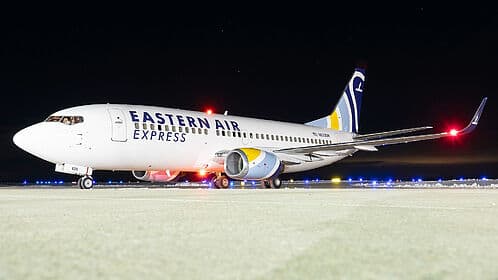
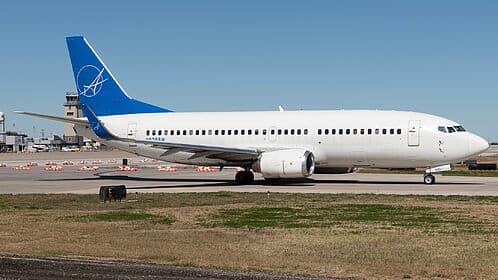


Basic Information
Airframe
Data valid as of 2024-05-01| Date | From | To | Flight Time | Status |
|---|---|---|---|---|
| 2025-07-20 | N/A | N/A | N/A | ✓ Landed |
| 2025-03-21 | N/A | N/A | N/A | ✓ Landed |
| 2024-12-18 | N/A | N/A | N/A | ✓ Landed |
| 2019-11-08 | N/A | N/A | N/A | ✓ Landed |
AI Summary
Boeing 737-300 (737-3H4) (3H4)
Overview
US standard/transport registration assigned 2024-05-01; airworthiness certificate dated 1996-04-23; registration expiration 2031-05-31. Mode S hex A82A75.
Specifications
- Engines: 2× CFM International CFM56-3B1 (20000 lbf each)
- Range: 2255 nm
- Cruise: 430 kts
- Seats: 149
- Ceiling: 37000 ft
Operations & Cabin
High-density single-class (Y143) — up to 149 seats
Model & Market Context
This airframe, registered as N625SW, is a Boeing 737-300 (737-3H4) built in 1996 with manufacturer serial number 27701. The aircraft is owned by EASTERN 737 ASSET HOLDINGS LLC, a corporate lessor based in Kansas City, MO, US, and is registered in the US. The airframe's configuration and ownership position it primarily as a high-density short- to medium-haul asset within the used narrowbody market; the transfer into a corporate asset-holding entity reflects a common pathway for 737-300s remaining in commercial or ACMI service late into their asset life. Condition and valuation specifics are not published here.
The cabin of this airframe is configured in a high-density single-class layout, listed as Y143 and certificated for up to 149 seats, reflecting a typical short- to medium-haul economy configuration used by charter, regional, or dense domestic scheduled operations. With twin CFM56-3B1 engines and a cruise speed of 430 kts, its mission profile suits multi-sector point-to-point flights within a roughly 2,255 nm radius, often deployed on high-frequency domestic routes or wet-lease/ACMI rotations. As a corporate-held asset based in Kansas City, MO, maintenance considerations prioritize aging‑airframe inspection items typical of 1990s 737 classics, such as structural fatigue monitoring and CFM56-3 series engine lifecycle management. No unique cabin amenities are published for this specific airframe.
The Boeing 737-300 occupies the classic-generation narrowbody niche for short- to medium-haul operations, offering robust payload and frequency advantages in dense markets. Competing models historically included the Airbus A320 family and later-generation 737 variants, with demand for 737-300s shifting toward lower-cost operators, charter services, and parts/standby fleets as newer, more fuel-efficient types entered service. Buyers and lessors consider factors such as remaining structural hours, CFM56-3 engine maintenance history, and the high-density 149-seat certification when evaluating resale or continued operational use.
Aircraft Comparison
| Parameter | N625SW | N1049A | N104HR |
|---|---|---|---|
| Serial Number (MSN) | 27701 | 30109 | 21525 |
| Year Manufactured | 1996 | 1999 | 1979 |
| Duration of Flight | 5 Hours | 7 Hours | N/A |
| Range | 2255 NM | 3265 NM | 2600 NM |
| Max Speed | 491 MPH | 493 MPH | 549 MPH |
| Aircraft Class | Over 20,000lbs | Over 20,000lbs | Over 20,000lbs |
| Service Ceiling | 37000 ft | 43000 ft | 35200 ft |
| Max Passengers | 149 | 290 | 134 |
| Cabin Comfort | No items found. | No items found. | No items found. |