N393UP
Boeing 767-316(ER)(BDSF) (316(ER)(BDSF))
Boeing
13 Hours
Duration of Flight
5980 NM
Range
486 MPH
Max Speed
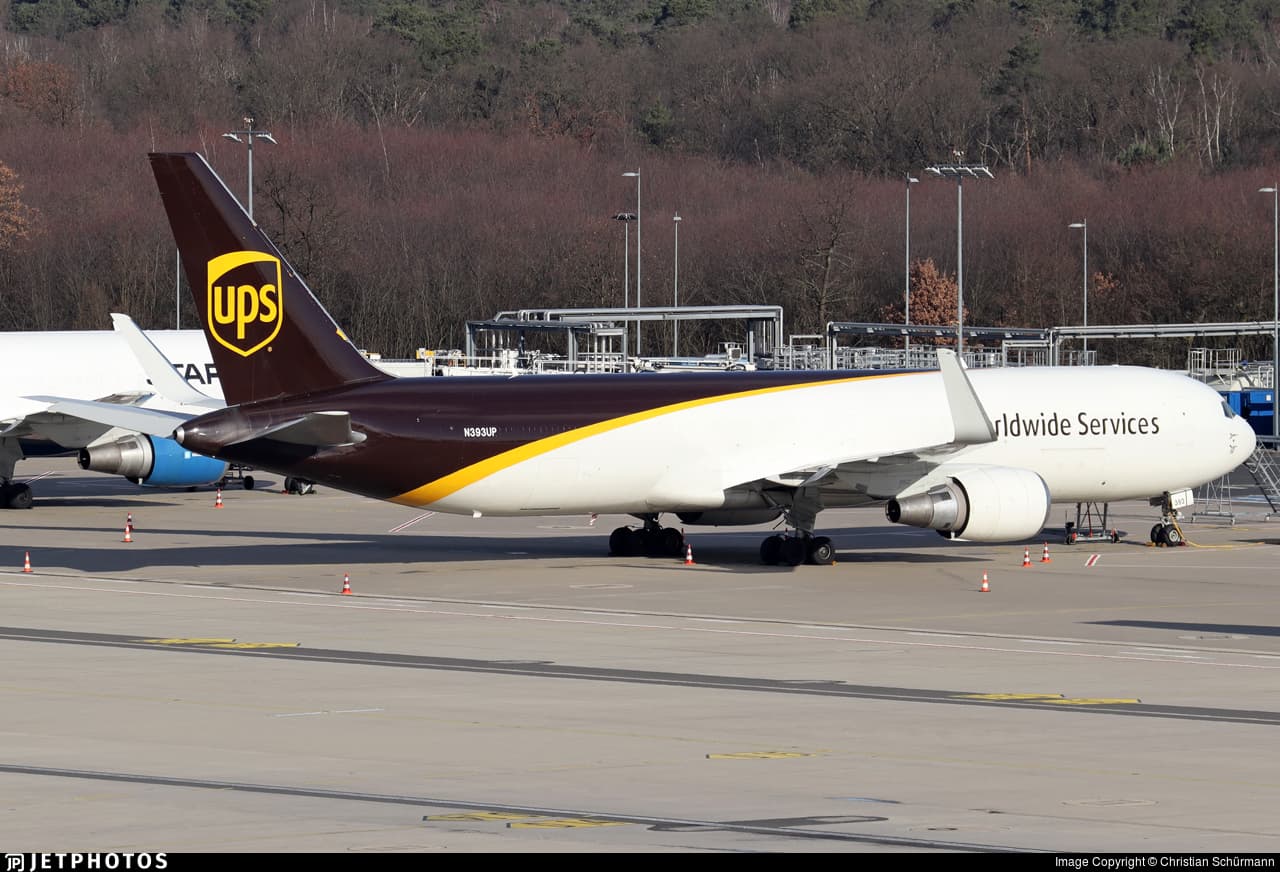
Gallery


Basic Information
Airframe
Data valid as of 2023-08-18| Date | From | To | Flight Time | Status |
|---|---|---|---|---|
| 2023-02-26 | N/A | N/A | N/A | ✓ Landed |
| 2024-06-07 | N/A | N/A | N/A | ✓ Landed |
| 2025-09-11 | N/A | N/A | N/A | ✓ Landed |
AI Summary
Boeing 767-316(ER)(BDSF) (316(ER)(BDSF))
Overview
U.S. registrant: CARGO AIRCRAFT MANAGEMENT INC. Transport certification; certificate issued 2019-07-02; airworthiness recorded 2020-09-15; registration valid (last action 2023-08-18, expiration 2029-07-31).
Specifications
- Engines: 2× General Electric CF6-80C2B7F (62000 lbf each)
- Range: 5980 nm
- Cruise: 459 kts
- Ceiling: 43000 ft
Operations & Cabin
Converted freighter (BDSF) main-deck cargo configuration
Model & Market Context
The airframe with registration N393UP is a Boeing-produced widebody built in 1998, manufacturer's serial number 29228, carrying the model designation Boeing 767-316(ER)(BDSF). The airframe is owned by CARGO AIRCRAFT MANAGEMENT INC, a corporation based in Wilmington, OH, US, and is registered in the US civil registry. The airframe was delivered as a passenger variant and later underwent a main-deck conversion to a freighter configuration (BDSF), a notable modification that defines its current role and value profile. Registry entries emphasize its fixed-wing multi-engine category and the conversion to a dedicated cargo layout, which has governed subsequent maintenance and operational oversight.
N393UP operates in a converted freighter configuration with a main-deck cargo layout as denoted by the BDSF conversion; this defines its primary mission as medium- to long-range cargo carriage rather than passenger transport. Typical operations for this airframe include transcontinental and international freight routes taking advantage of its nearly 6,000 nm range and high cruise speed, often flown from the owner’s operational base and contract hubs in the United States. The avionics fit generally follows Boeing 767 common-type standards post-conversion, with modifications to systems and interior structure to support palletized cargo, reinforced floors, and a large forward cargo door. Maintenance considerations specific to this airframe include life-limited part tracking tied to its 1998 build year and the inspection regimes associated with conversion and high-utilization freighter service.
The Boeing 767-300ER family occupies a niche for operators needing a capable twin-engine widebody freighter with long range and efficient fuel burn relative to older four-engine types. Competing models include the Airbus A310/A330 freighter derivatives and older 757 freighters for narrower mission sets; the 767-300ER(BDSF) strikes a balance between payload and range for long-haul cargo operators. Resale and maintenance considerations emphasize the airframe’s conversion status, original serial 29228 heritage, and the CF6-80C2 engine type—factors that influence aftermarket demand, maintenance cost profile, and operator interest in the cargo-to-passenger market segment.
Aircraft Comparison
| Parameter | N393UP | N1013A | N101TD |
|---|---|---|---|
| Serial Number (MSN) | 29228 | 30110 | 29273 |
| Year Manufactured | 1998 | 1999 | 1999 |
| Duration of Flight | 13 Hours | 13 Hours | 13 Hours |
| Range | 5980 NM | 5980 NM | 6085 NM |
| Max Speed | 486 MPH | 493 MPH | 473 MPH |
| Aircraft Class | Over 20,000lbs | Over 20,000lbs | Over 20,000lbs |
| Service Ceiling | 43000 ft | 43100 ft | 41000 ft |
| Max Passengers | 0 | 290 | 149 |
| Cabin Comfort | No items found. | No items found. | No items found. |