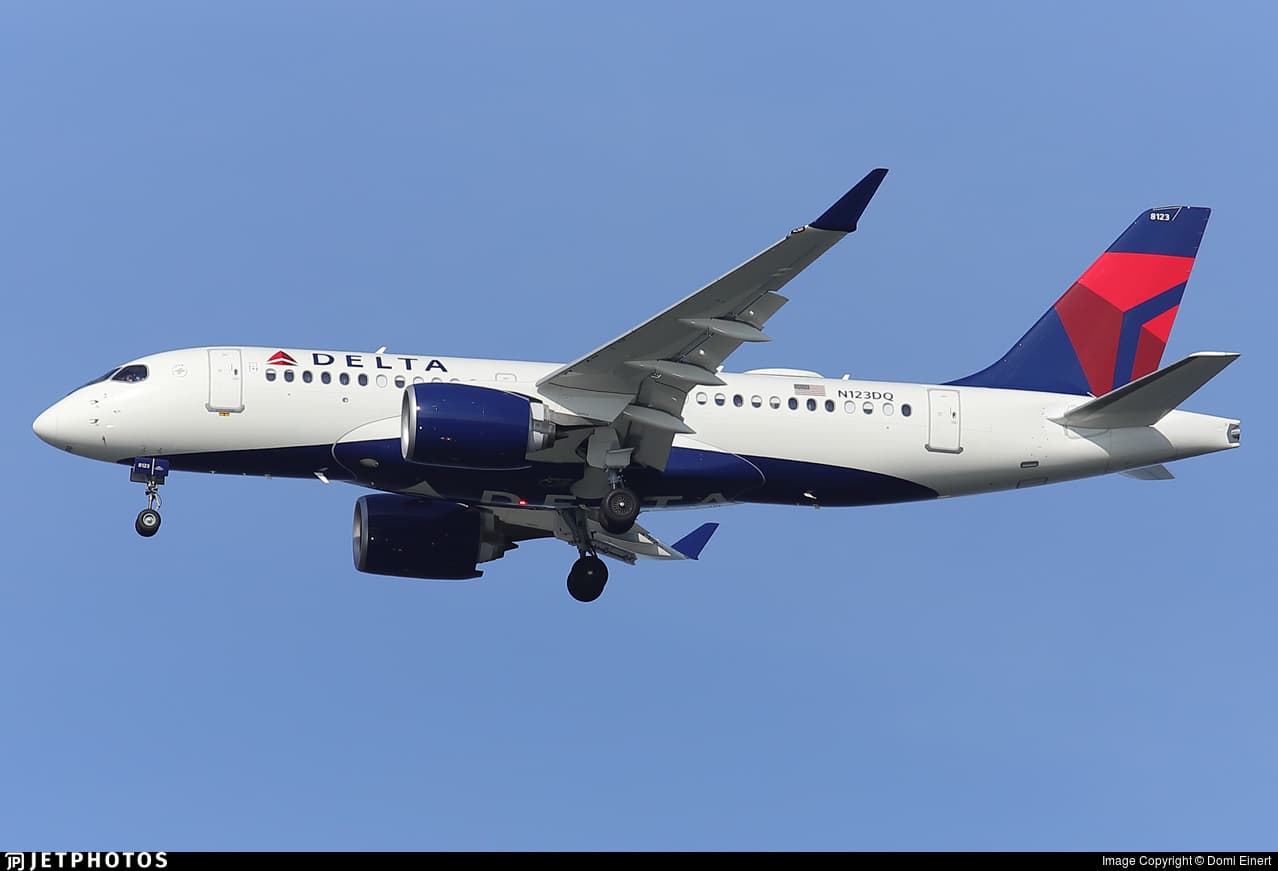
N123DQ
Airbus A220-100 (A220-171) (A220-171)
Airbus (formerly Bombardier CSeries)
8 Hours
Duration of Flight
3600 NM
Range
470 MPH
Max Speed
Gallery


Basic Information
Airframe
Data valid as of 2025-11-26| Date | From | To | Flight Time | Status |
|---|---|---|---|---|
| 2025-06-12 | N/A | N/A | N/A | ✓ Landed |
| 2025-06-05 | N/A | N/A | N/A | ✓ Landed |
| 2025-06-02 | N/A | N/A | N/A | ✓ Landed |
| 2025-05-30 | N/A | N/A | N/A | ✓ Landed |
| 2025-01-19 | N/A | N/A | N/A | ✓ Landed |
| 2024-11-05 | N/A | N/A | N/A | ✓ Landed |
AI Summary
Airbus A220-100 (A220-171) (A220-171)
Overview
U.S. registration N123DQ; delivered to Delta in September 2019 (test registration C-FPAI prior to handover). Mode S hex A05F31. Operated in Delta's 109-seat A220-100 fleet.
Specifications
- Engines: 2× Pratt & Whitney PW1500G (21000 lbf each)
- Range: 3600 nm
- Cruise: 447 kts
- Seats: 109
- Ceiling: 41000 ft
Operations & Cabin
Delta 109-seat layout: 12 First, 15 Delta Comfort+, 82 Main Cabin Delta First recliner seats (2‑2), Comfort+ and Main Cabin with in‑seat screens and USB power; large overhead bins and mood lighting per Delta A220 standard fit. Avionics: Rockwell Collins Pro Line Fusion (A220 integrated flightdeck displays)
Model & Market Context
The airframe bearing tail number N123DQ is an Airbus A220-100 (A220-171) completed in 2019 with manufacturer's serial number 50042. The jet is owned by Delta Air Lines, Inc., a corporation based in Atlanta, GA, US, and is registered in the US. This airframe carries the history of the platform's corporate transition, having been produced by Airbus (formerly Bombardier CSeries), a notable manufacturing lineage that influenced fleet commonality decisions. At a market estimate of $44,000,000, the aircraft's valuation reflects its relatively recent build year and narrow-body regional configuration.
Configured in Delta's 109-seat layout, N123DQ carries 12 First, 15 Delta Comfort+, and 82 Main Cabin seats, aligning cabin density with short- to medium-haul network missions. The flightdeck is equipped with the Rockwell Collins Pro Line Fusion system, presented on the A220 integrated flightdeck displays, supporting modern avionics and crew situational awareness. Typical operation for this airframe would emphasize regional and transcontinental routes within the carrier's network, leveraging the A220-100's efficient twin-engine profile and extended range capability. Maintenance and operational considerations for this specific aircraft reflect type-common Pratt & Whitney PW1500G engine support and the manufacturer's service provisions following the Airbus acquisition of the CSeries program.
The Airbus A220-100 (A220-171) occupies a performance niche between regional jets and larger single-aisle types, offering lower trip costs and cabin comfort for 100–130 seat missions. Competing models are those targeting the same sector of high-efficiency smaller single-aisles; buyer demand has been driven by operators seeking modern avionics and fuel-efficient geared turbofan propulsion. Resale and maintenance considerations for N123DQ center on engine lifecycle support for the PW1500G and fleet commonality advantages within airlines operating the A220 family, with the airframe's recent build year and Delta ownership supporting residual value.