Cessna / 2006 - 2017
Cessna Citation Mustang
The Cessna Citation Mustang is a VLJ manufactured by Cessna between 2006 and 2017.
Explore detailsThe Cessna Citation Mustang is a single-pilot-certified jet aircraft, built to provide ample storage area, advanced engine controls, and a sleek aerodynamic design. The smallest of the Cessna Citation family, the Citation Mustang features one of the fastest cruising speeds and largest baggage capacities in...
Although the interior cabin is relatively small compared to larger options on the market, it uses its available space efficiently and stylishly. Ergonomic seating is comparable to many larger models including fully-re...
The jet’s efficient performance traits are a result of its two Pratt and Whitney Canada PW615F turbofan engines, producing 1,350 pounds of thrust each. Although Raytheon was the PW615F’s original launch customer, Cita...
Featuring simple Garmin G1000 integrated avionics and many automated flight systems, the Mustang requires only one pilot and is ideal for owners who prefer to fly their own jets. Pilots will appreciate clear, consolid...
This jet is one of the most economical jets available for charter flights from and to New York, with a wide range of availability in several major aviation markets. The cost to charter this jet starts at around $2,500 an hour. Hourly charter rates do not include all taxes, fuel, and other fees. Charter costs will va...
Fleet Registry
Registered Aircraft
Loading registered aircraft...
Value History
Pre-owned market movement based on the stored acquisition timeline.
Range Profile
Compares practical operating range against full-seat and ferry scenarios.
Estimated reduction per added passenger: 70 NM
Hourly Cost Mix
North America hourly ownership cost composition based on stored operating inputs.
Noise Profile
Stored operational noise readings across the main reference conditions.
Key Facts
Purchase Price
The acquisition cost for this jet typically ranges from $3.5 million. The price of a jet depends on the production year; it can also go above the given range if the production is new.
It will cost buyers around $500k per year which includes fuel, crew members, and maintenance, etc. The price of a pre-owned aircraft can be within $2 million.
There are numerous sellers available on various sites.
Range Map
Overview & History
The Cessna Citation Mustang is a single-pilot-certified jet aircraft, built to provide ample storage area, advanced engine controls, and a sleek aerodynamic design. The smallest of the Cessna Citation family, the Citation Mustang features one of the fastest cruising speeds and largest baggage capacities in the class, as well as a full Federal Aviation Administration (FAA) type certification to fly into known icing conditions.
Launched at the 2002 NBAA convention, the $2.4 million Mustang first flew on April 23, 2005. The airplane received full type certification from the Federal Aviation Administration on September 8, 2006.
Cessna received FAA certification to fly into “known icing conditions” on November 9, 2006. Cessna delivered the first production LJ on November 22, 2006, the same day the FAA awarded Cessna with the necessary certification.
Dave and Dawn Goode of GOODE Ski Technologies received the first retail delivered Cessna Mustang on April 23, 2007.
Cessna Citation Mustang Performance
The jet’s efficient performance traits are a result of its two Pratt and Whitney Canada PW615F turbofan engines, producing 1,350 pounds of thrust each. Although Raytheon was the PW615F’s original launch customer, Citation recognized the engine’s potential and delivered it first in the Mustang.
The PW600 line lowered purchasing and operating costs significantly. These engines employ a FADEC (Full Authority Digital Electrical Control) system, making them extremely efficient and simple in flight.
Their inspection interval is 3,500 hours. In addition to being powerful engines, the PW600 line is also economical, reducing operating costs and purchase prices significantly in models utilizing the equipment.
To top it all off, the FADEC control system further increases efficiency and simplicity in travel. Known for being able to be piloted easily.
It can cruise at speeds as fast as 340 knots true airspeed. At sea level, the Mustang can take off in just 3,110 feet.
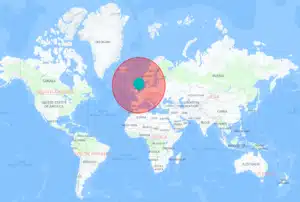
Following take-off, the jet can climb swiftly to 41,000 feet and continue to fly for the duration of a 1,150 nautical mile-long trip, carrying a single pilot and three passengers. It burns 100 gallons of fuel per hour.
Cessna Citation Mustang Interior
Although the interior cabin is relatively small compared to larger options on the market, it uses its available space efficiently and stylishly. Ergonomic seating is comparable to many larger models including fully-reclinable leather seats with AC power supply, storage space consoles, retractable work tables, and comfortable armrests.
Additionally, the Mustang has an impressive amount of storage space for a jet of its category boasting 57 cubic feet (or 620 lbs) of external baggage volume.
If you are looking for the ideal entry-level jet for one to three passengers, the Mustang is an incredibly cost-effective, comfortable, and efficient choice for short-range trips. While the Mustang isn’t capable of going coast to coast, it’s a breath of fresh air for those who know where they need to go and want to get there quickly.
It excels at state-to-state travel and luxury vacationing with recessed walls to accommodate ski transport. The Mustang is incredibly fast, incredibly affordable, and incredibly innovative.
It can carry four passengers.
Cockpit
Featuring simple Garmin G1000 integrated avionics and many automated flight systems, the Mustang requires only one pilot and is ideal for owners who prefer to fly their own jets. Pilots will appreciate clear, consolidated flat panel displays, which make the piloting experience straightforward and intuitive.
This is a huge advantage as it not only provides extreme versatility and flexibility but also significantly reduces the cost of operations. Even if hiring a pilot, the Mustang’s simple one pilot cockpit solidifies its place as one of the most economical private jets available in today’s market.
Cessna Citation Mustang Charter Cost
This jet is one of the most economical jets available for charter flights from and to New York, with a wide range of availability in several major aviation markets. The cost to charter this jet starts at around $2,500 an hour.
Hourly charter rates do not include all taxes, fuel, and other fees. Charter costs will vary based on year of make/model, schedule, routing, passenger & baggage totals, and other factors.
Private Aviation Advisory