Dassault / 1980 - 1996
Dassault Falcon 50
The Dassault Falcon 50 is a large jet manufactured by Dassault between 1980 and 1996.
Explore detailsThe Dassault Falcon 50 is a French super-midsize, long-range business jet, featuring a trijet layout with an S-duct air intake for the central engine. It has the same fuselage cross-section and similar capacity as the earlier twin-engined Falcon 20 but was a new design that is an area ruled and includes a...
The Falcon 50 is generally configured to accommodate eight to ten patrons, but it can be arranged to accommodate a maximum of nineteen passengers. The roomy cabin of the Falcon 50 measures 23.5 feet in length, stretch...
The Dassault Falcon 50 utilizes three Honeywell TFE731-3-1C turbofan engines. These powerful engines are rated at 3,700 pounds of thrust per engine. Each engine uses a separate fuel system of just over 5,000 pounds of...
The avionics system of the Falcon 50 includes an ADC 80 air data computer, a Collins FCS-80F autopilot computer, dual VHF comm and nav radios, a Primus color weather radar, DME measuring equipment, and a radio altimet...
The cost to charter this jet starts at around $5,300 an hour. Hourly charter rates do not include all taxes, fuel, and other fees. Charter costs will vary based on year of make/model, schedule, routing, passenger & baggage totals, and other factors.
Fleet Registry
Registered Aircraft
Loading registered aircraft...
Value History
Pre-owned market movement based on the stored acquisition timeline.
Range Profile
Compares practical operating range against full-seat and ferry scenarios.
Estimated reduction per added passenger: 14 NM
Hourly Cost Mix
North America hourly ownership cost composition based on stored operating inputs.
Noise Profile
Stored operational noise readings across the main reference conditions.
Key Facts
Purchase Price
The acquisition cost for this jet typically ranges from $4-6 million.
The price of a jet depends on the production year; it can also go above the given range if the production is new.
It will cost buyers around $ 1-1.5 million per year which includes fuel, crew members, and maintenance, etc.
The price of a pre-owned aircraft can be within $1-2 million.
Range MapOperational Radius 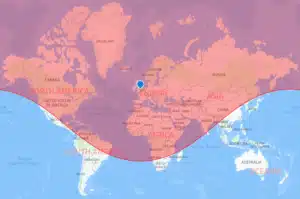 Overview & HistoryThe Dassault Falcon 50 is a French super-midsize, long-range business jet, featuring a trijet layout with an S-duct air intake for the central engine. It has the same fuselage cross-section and similar capacity as the earlier twin-engined Falcon 20 but was a new design that is an area ruled and includes a more advanced wing design. Dassault Aviation created the Falcon 50 to be able to complete intercontinental flights, and still maintain a short takeoff distance and a roomy cabin. At the time of its completion, it was the first private jet on the market with an intercontinental range. Its range/payload capacity is pretty impressive, even years after its release. With the success of the previous Dassault Falcon jets, it is no wonder that Dassault Aviation decided to press on in the business jet market. Designs for the Falcon 20 were built upon and improved, and the Dassault Falcon 50 was introduced. The first prototype of the Falcon 50 was flown on November 7, 1976 and the private business jet received French airworthiness certification on February 27, 1979, followed closely by U.S. FAA certification on March of that year. By the time deliveries began in July of 1979, the wing design had been modified to incorporate a supercritical wing design. Dassault Falcon 50 PerformanceThe Dassault Falcon 50 utilizes three Honeywell TFE731-3-1C turbofan engines. These powerful engines are rated at 3,700 pounds of thrust per engine. Each engine uses a separate fuel system of just over 5,000 pounds of fuel which adds up to an impressive total of 15,520 pounds of fuel, allowing the Falcon 50 to fly nonstop for seven hours while still meeting FAA minimum fuel reserve requirements. These engines feature a combined fuel consumption rate of 2,100 to 2,200 pounds of fuel per hour, making the Falcon 50 an attractive economic option as well. This private business jet features a maximum certified service ceiling of 49,000 feet and an impressive intercontinental range of 3,100 nautical miles. The Falcon 50 requires 4,700 feet of runway to take off and needs only 2,150 feet of runway to land on a standard day. This private business jet is capable of climbing to an altitude of 39,000 feet in just thirty minutes. The Falcon 50 can fly at an impressive 468 knots at an altitude of 37,000 feet in a high-speed cruise configuration for a swift flight. In a long-range cruise configuration, the Dassault Falcon 50 is capable of maintaining 410 knots at an altitude of 43,000 feet. Dassault Falcon 50 InteriorThe Falcon 50 is generally configured to accommodate eight to ten patrons, but it can be arranged to accommodate a maximum of nineteen passengers. The roomy cabin of the Falcon 50 measures 23.5 feet in length, stretches 6.1 feet in width and reaches 5.9 feet in height for a comfortable total cabin volume of 700 cubic feet. Fourteen windows surround the cabin, contributing to a light environment. CockpitThe avionics system of the Falcon 50 includes an ADC 80 air data computer, a Collins FCS-80F autopilot computer, dual VHF comm and nav radios, a Primus color weather radar, DME measuring equipment, and a radio altimeter. Additional systems may be added as desired. Dassault Falcon 50 Charter CostThe cost to charter this jet starts at around $5,300 an hour. Hourly charter rates do not include all taxes, fuel, and other fees. Charter costs will vary based on year of make/model, schedule, routing, passenger & baggage totals, and other factors. Private Aviation Advisory Take control of how you flyRelated Similar Models |
|---|