N711HT
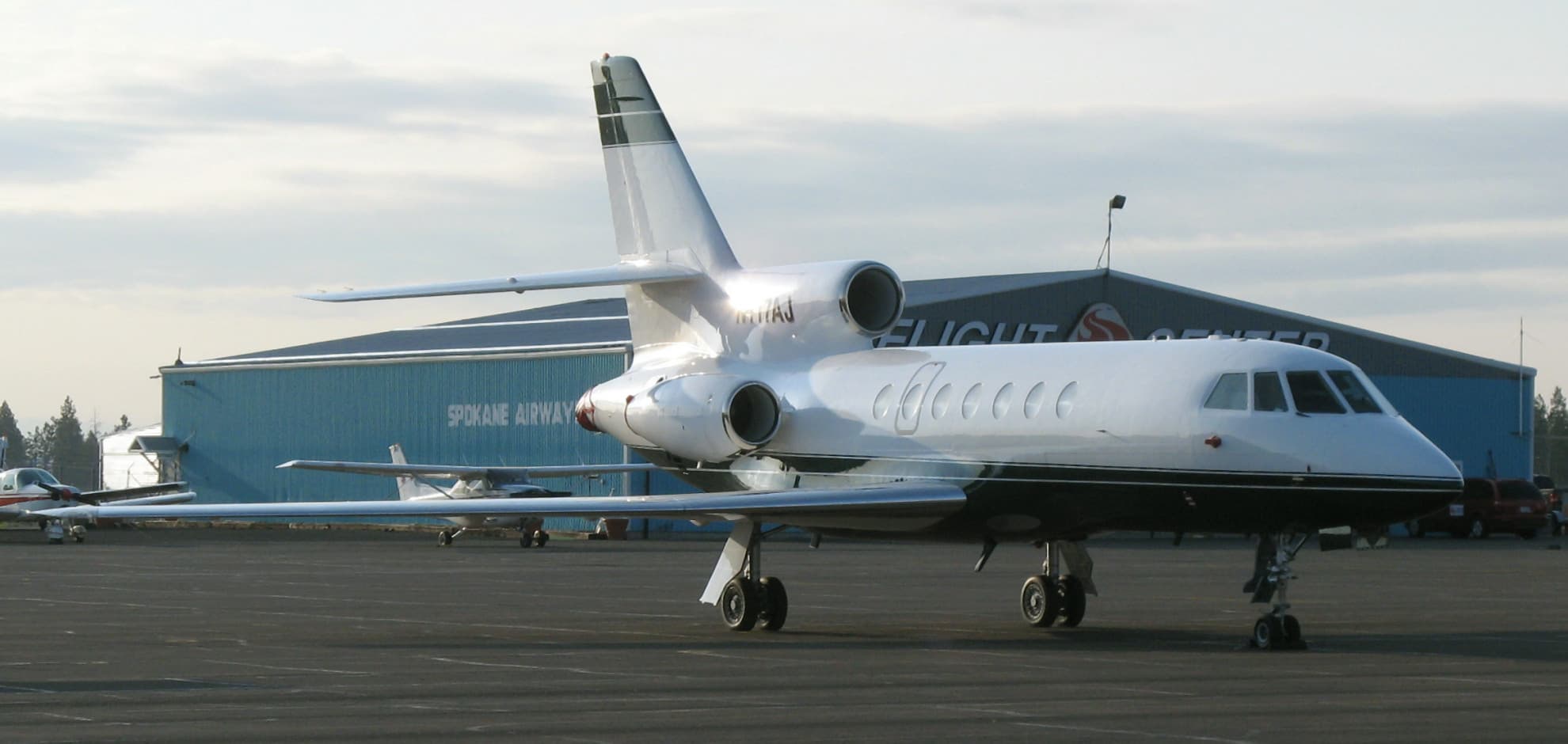
Dassault Falcon 50 (Falcon 50 series)
Dassault (Dassault Aviation)
7 Hours
Duration of Flight
3057 NM
Range
494 MPH
Max Speed
Gallery




Basic Information
Airframe
Data valid as of 2022-01-24No flight history available
Flight records for this aircraft have not been tracked yet.
AI Summary
Dassault Falcon 50 (Falcon 50 series)
Overview
1982 Dassault Falcon 50, MSN 66; registered to JACKPOT JET LLC (Sugar Land, TX). Airworthiness class: Standard/Normal. Mode S: A98085. Certificate issue: 2016-01-22. Last action: 2022-01-24. Expiration: 2025-01-31.
Specifications
- Engines: 3× Honeywell TFE731-3-1C (3700 lbf each)
- Range: 3057 nm
- Cruise: 420 kts
- Seats: 10
- Ceiling: 49000 ft
Operations & Cabin
Executive 8–10 passenger layout; forward galley, mid/aft club seating and aft lav in typical Falcon 50 layouts. Typical Falcon 50 executive fit — small galley, forward service, executive chairs/sofas for up to 9–10 passengers; specific N711HT cabin refits not publicly documented. Avionics: Reported avionics entries include Collins TCAS-4000, Rockwell Collins TDR-94D Mode S transponder and Collins ALT-55B altimetry elements (aggregated equipment lists).
Model & Market Context
This airframe, bearing registration N711HT, is a 1982-built Dassault Falcon 50 with manufacturer serial number 66. The jet is manufactured by Dassault (Dassault Aviation) and is currently owned by JACKPOT JET LLC, a corporate owner based in Sugar Land, TX, US; the registration is in the US. The type is a Falcon 50 series tri-jet long-range executive transport, and its reported market valuation at the time of record is $1,900,000. No other registry actions or ownership transfers are provided beyond the named corporate owner.
The cabin is reported in an executive configuration supporting 8–10 passengers with a forward galley, mid/aft club seating, and an aft lavatory in the typical Falcon 50 layout; the specific outfitting for N711HT is described as an executive 8–10 passenger layout. Avionics entries aggregated for this airframe include Collins TCAS-4000, Rockwell Collins TDR-94D Mode S transponder and Collins ALT-55B altimetry elements, indicating a civil traffic surveillance and altitude-encoding complement consistent with extended-range IFR operations. Based from the owner’s location in Sugar Land, TX, US, the aircraft’s performance — including a long-range capability of 3,057 nm and a cruise of 420 kts — supports typical missions such as transcontinental business travel and offshore routing without enroute stops. Maintenance considerations for an early-1980s airframe of this type would typically emphasize engine program status, avionics currency, and structural and systems inspections relative to its age.
The Dassault Falcon 50 family occupies a performance niche as a three-engine, transcontinental executive jet offering higher redundancy and long-range capability compared with light twins of the era. Competing models historically included other long-range light-to-midsize business jets, but the Falcon 50’s tri-jet layout and service ceiling of 49,000 ft distinguished it for overwater and high-altitude routings. Secondary-market demand and resale value for a 1982 airframe are influenced by completed modernization/modification work, remaining component life, and the documented avionics fit; the reported valuation of $1,900,000 reflects these cumulative factors for this specific airframe.