N17A
Learjet 36A (36A)
Gates Learjet (Learjet / Bombardier)
6 Hours
Duration of Flight
2708 NM
Range
348 MPH
Max Speed
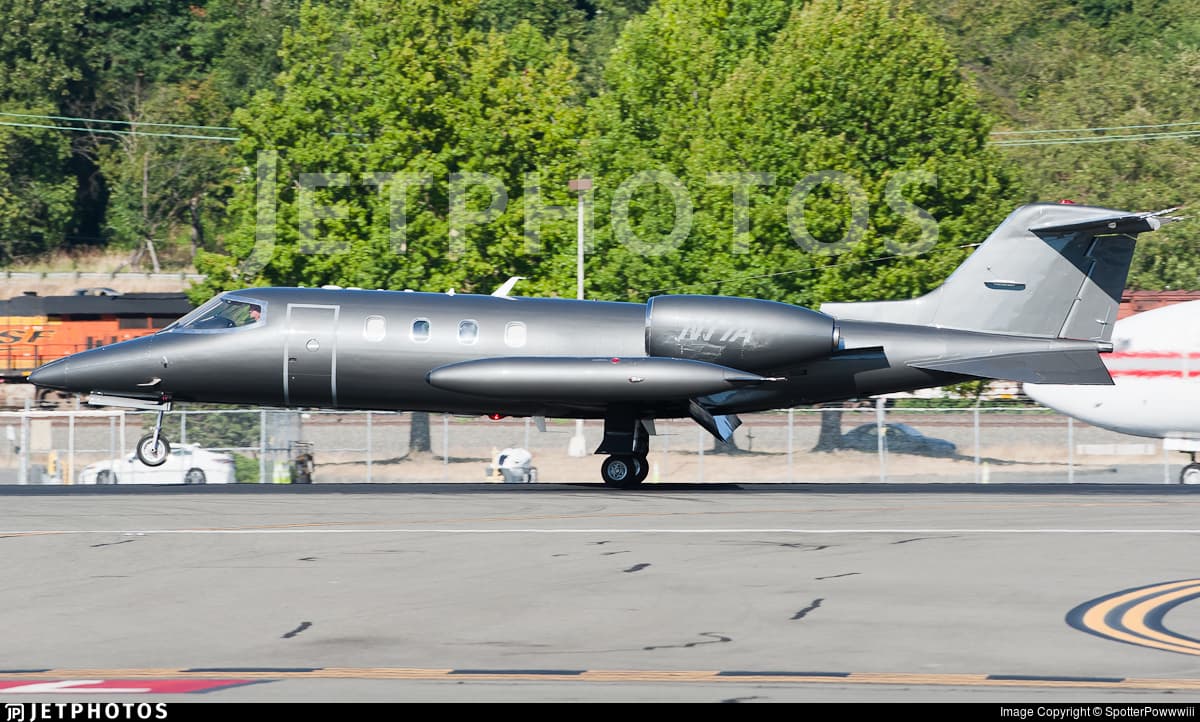
Gallery


Basic Information
Airframe
Data valid as of 2024-06-06No flight history available
Flight records for this aircraft have not been tracked yet.
AI Summary
Learjet 36A (36A)
Overview
Assigned to VALIAIR LIMITED CO TRUSTEE (Ogden, UT). Airworthiness class listed Experimental/Normal. Certificate issued 2024-06-06; airworthiness 2003-08-26; registration expiration 2031-06-30. Mode S hex A116D4.
Specifications
- Engines: 2× TFE731-5BR (4750 lbf each)
- Range: 2708 nm
- Cruise: 441 kts
- Seats: 10
- Ceiling: 45000 ft
Operations & Cabin
Compact short-fuselage Learjet layout; commonly a 4-place club or 6–8 place executive arrangement (registry lists up to 10 seats). Small executive cabin with limited baggage volume; typical refits include leather seating and modern audio/comm upgrades where modified. Avionics: Collins Pro Line / mixed Collins-Universal retrofits (varies by airframe)
Model & Market Context
This entry covers the specific airframe N17A, a short-fuselage business jet built in 1980 as a Learjet 36A with serial number 36-046. The aircraft is registered in the US and is held by VALIAIR LIMITED CO TRUSTEE, a trustee/LLC based in Ogden, UT, US, a change in legal ownership noted in registry records. The airframe has been valued at $176,000, and registry entries list a compact executive configuration and mixed avionics retrofits indicative of varying condition and mission fit across its operational life.
The airframe retains the compact short-fuselage Learjet layout typically configured as a 4-place club or a 6–8 place executive arrangement, with the registry listing up to 10 seats, allowing flexible interior fits according to operator requirements. Avionics installations on this airframe are reported as Collins Pro Line and mixed Collins‑Universal retrofits, reflecting airframe-specific modernization paths and variability in instrumentation. Typical mission profiles for this Learjet 36A include short-to-medium range executive transport and light charter operations within its 2,708 nm range and high-speed cruise capability of 441 kts, operating from the owner's base area around Ogden, UT. Maintenance and operational planning for this particular aircraft are influenced by its twin TFE731-5BR engines and the mixed avionics state, which can affect parts sourcing and upgrade timelines.
The Learjet 36A airframe represented here occupies a performance niche defined by high cruise speed and transcontinental short-fuselage range capability, exemplified by its 441 kts cruise and 2,708 nm range. Market demand for such short-fuselage Learjets tends toward owners and operators seeking compact, fast executive transports with single-pilot operational flexibility and modest seating up to 10. Resale and maintenance considerations for this airframe are shaped by its age (1980), the condition and type of avionics retrofits, and the lifecycle of the TFE731-5BR powerplants, all factors that contribute to its current valuation of $176,000.