Bombardier / 1988 - 1993
Bombardier Challenger 601-3AER
The Bombardier Challenger 601-3A ER is a large jet manufactured by Bombardier between 1988 and 1993.
Explore detailsThe Bombardier Challenger 601-3AER, categorized under the large aircraft class, is part of the popular Challenger 600 family of business jets. Bombardier’s journey began as a snowmobile manufacturer in the 1930s. Over the years, it broadened its horizons, entering the aviation sector and establishing itsel...
he aircraft offers a luxurious cabin that mirrors Bombardier’s commitment to comfort and style. The cabin is extensive, measuring 28.3 feet (8.6 meters) in length, 8.2 feet (2.5 meters) in width, and 6.1 feet (1.9 met...
Given that this is a variant of the Challenger 600, many aspects remain the same or similar to that of the other aircraft in the family. The Bombardier Challenger 601-3AER is powered by two General Electric CF34-3A tu...
Just as with the -3A model, the 601-3AER does include an all-glass cockpit, digital Collins HR 9000 communications systems, and dual digital Honeywell DFZ-800 flight guidance systems. As standard, it is equipped with...
Chartering the Bombardier Challenger 601-3AER typically costs around $6,100 per hour in North America. However, it’s essential to understand that the exact cost can vary depending on several factors. The flight distance, departure and arrival locations, duration of the stay, and the time of the year are some variabl...
Fleet Registry
Registered Aircraft
Loading registered aircraft...
Value History
Pre-owned market movement based on the stored acquisition timeline.
Range Profile
Compares practical operating range against full-seat and ferry scenarios.
Estimated reduction per added passenger: 18 NM
Hourly Cost Mix
North America hourly ownership cost composition based on stored operating inputs.
Noise Profile
Stored operational noise readings across the main reference conditions.
Key Facts
Bombardier Challenger 601-3AER Purchase Cost
The Bombardier Challenger 601-3AER, with its advanced technologies and exceptional performance standards, came onto the market at a price of $18 million when newly released.
As time has passed, an average pre-owned model of this aircraft can now be purchased at a considerably reduced price, around $1.29 million.
Notwithstanding the initial purchase price, it is also crucial to consider the ongoing costs of owning such an aircraft.
For an owner flying approximately 200 hours per year, the estimated annual ownership cost for a Challenger 601-3AER is about $995,000.
These figures incorporate various expenditures such as maintenance, fuel, insurance, and crew salaries. This comprehensive understanding of both purchase and operational costs is essential for prospective buyers to make an informed decision.
Range MapOperational Radius 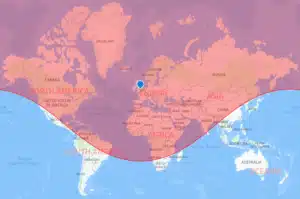 Overview & History of the Challenger 601-3A VariantThe Bombardier Challenger 601-3AER, categorized under the large aircraft class, is part of the popular Challenger 600 family of business jets. Bombardier’s journey began as a snowmobile manufacturer in the 1930s. Over the years, it broadened its horizons, entering the aviation sector and establishing itself as a major player. The creation of the Challenger 601-3AER marked a significant milestone in the company’s history. The aircraft was conceived with the aim of combining powerful performance with the ultimate travel comfort. It was a testament to Bombardier’s commitment to innovation, setting new standards in the private jet market of the time. Despite the lapse of years, the Challenger 601-3AER still holds a unique place in the world of luxury aviation, embodying Bombardier’s lasting legacy of excellence in design and performance. Challenger 601-3A/ER PerformanceGiven that this is a variant of the Challenger 600, many aspects remain the same or similar to that of the other aircraft in the family. The Bombardier Challenger 601-3AER is powered by two General Electric CF34-3A turbofan engines, each delivering a thrust output of 18,440 lbs (8,364 kg). These high-bypass engines and updated drag-reducing winglets enable the aircraft to maintain a maximum speed of 459 knots (850 km/h, 0.85 Mach) and a long-range cruise of 425 knots (787 km/h). Capable of soaring to an impressive maximum altitude of 41,000 feet (12,497 m), the Challenger 601-3AER ensures a smooth ride. The aircraft boasts an impressive range of 3,590 nautical miles (6,648 km), allowing for transcontinental flights without the need for refueling stops. It requires a takeoff distance of 6,500 feet (1,981 m), allowing it to operate from a myriad of airports, including those with shorter runways. Landing is equally efficient, with a modest landing distance of just 2,800 feet (853 m). It’s important to note that these figures represent the best-case scenario. Actual range and ground performance can be influenced by numerous factors, including weather conditions, the weight of the payload, and specific airport regulations. Interior of the Bombardier Challenger 601-3AERhe aircraft offers a luxurious cabin that mirrors Bombardier’s commitment to comfort and style. The cabin is extensive, measuring 28.3 feet (8.6 meters) in length, 8.2 feet (2.5 meters) in width, and 6.1 feet (1.9 meters) in height, providing ample space for passengers to stretch out and relax. The cabin volume of 1,035 cubic feet ensures a spacious environment for travel. In a standard executive aircraft configuration, the interior layout is divided into a forward galley, followed by two seating sections. Passengers will also be delighted with the “deluxe” galley and lavatory. The typical layout includes a four-chair club section followed by either a conference grouping area or divans. The latter can conveniently serve as sleeping accommodations. The seats are fully reclinable and can swivel, enhancing the comfort level for passengers. The aircraft can comfortably accommodate up to 9 passengers, although it can seat a maximum of 12 in a different configuration. Beyond its generous dimensions and luxurious seating, the Challenger 601-3AER also boasts a remarkably low cabin altitude for enhanced passenger comfort. The cabin altitude remains at sea level until the aircraft reaches 23,200 feet (7,071 meters), and the maximum cabin altitude is 6,500 feet (1,981 meters), resulting in less fatigue over long journeys. This variant of the Challenger 601 is also known for its low noise levels. Further enhancing the passenger experience, early models of the aircraft featured additional amenities such as telephones, lighting controls, stereo systems, and foldaway tables attached to the cabin walls. There are also wardrobes placed at the front and back for storing hand luggage and other small items. 601-3AER CockpitJust as with the -3A model, the 601-3AER does include an all-glass cockpit, digital Collins HR 9000 communications systems, and dual digital Honeywell DFZ-800 flight guidance systems. As standard, it is equipped with an array of avionics, including a dual-channel Sperry SPZ-600 automatic flight control system. This system, more typical to larger commercial aircraft, includes a flight director and air data computers and is certifiable for conducting Category 3A automatic landings. The flight control system boasts significant redundancy, featuring three individual hydraulic systems. This ensures that even in the event of a complete failure resulting in the loss of one actuator, there remains a viable level of assisted control over the key flight surfaces. In addition to this, the Challenger 601-3AER is outfitted with the Honeywell Primus 650 digital weather radar and Marconi-built solid-state instrument displays as standard. The aircraft also comes with a Collins-built radio set, with optional long-range radio-based equipment available for installation. These optional features can include an HF radio set and VHF navigational aids, further enhancing the aircraft’s navigational capabilities. Challenger 601-3AER Charter CostChartering the Bombardier Challenger 601-3AER typically costs around $6,100 per hour in North America. However, it’s essential to understand that the exact cost can vary depending on several factors. The flight distance, departure and arrival locations, duration of the stay, and the time of the year are some variables that could influence the charter cost. Additionally, potential supplementary costs such as overnight fees for crew, landing fees, and catering could also impact the final price. Private Aviation Advisory Take control of how you flyRelated Similar ModelsLarge Bombardier Challenger 300 3,220 nm10 pax$4.9k/hr Large Bombardier Challenger 350 3,200 nm10 pax$5.8k/hr Large Bombardier Challenger 3500 3,400 nm10 pax$5.5k/hr Large Bombardier Challenger 600 2,909 nm12 pax$4.8k/hr Large Bombardier Challenger 601-1A 3,200 nm12 pax$4.8k/hr Large Bombardier Challenger 601-3A 3,100 nm12 pax$4.5k/hr |
|---|